
_After 18 years, Qwaqwa Campus opens its doors to healers_
By Emily Setona
QWAQWA — For 18 years, the gates of academia stayed shut. On 21 September, they finally opened. In a packed Sedibeng Hall at the University of the Free State Qwaqwa Campus, the university did what it had never done before — it welcomed traditional healers not as subjects to be studied, but as professors of African wisdom.
It was more than a Heritage Month event. It was a historic correction.
Acting Director of the Centre for Gender and Africa Studies, Professor Grey Magaiza, set the tone with a frank admission.
“I’ve been here for 18 years, and this is the first time, first time ever, we are bringing our traditional healers and practitioners to such a platform,” he said.
“We welcome you not simply as guests. You are the knowledge holders. If we want to know about the past, we have to come to you.” Magaiza said the university must move
“From extraction to exchange, from treating people as research subjects to recognizing knowledge holders and partners in knowledge production.”
UFS Qwaqwa Campus Principal, Professor Prince Ngobeni, went further — warning that indigenous knowledge, the bedrock of African identity and dignity, will die if universities continue to dismiss it because it was not born in a laboratory.
“Our universities have an important role to play. We must ensure that knowledge that has sustained communities for generations is not dismissed simply because it originated outside formal academia,” he said.
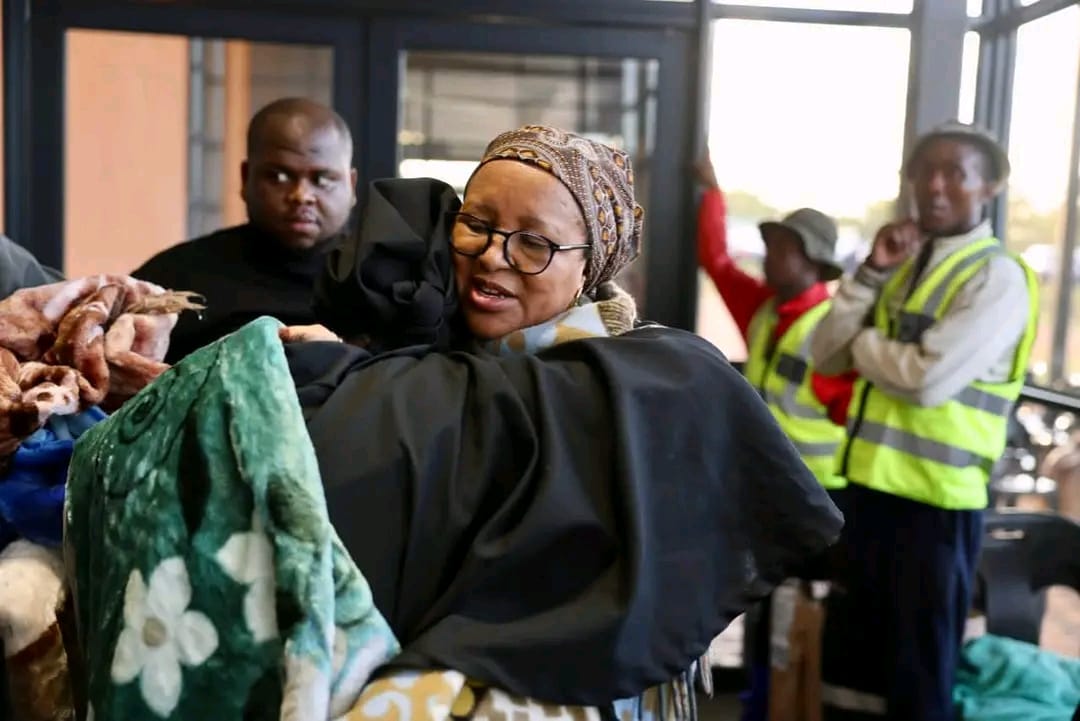
Then the real custodians took the floor — among them Ntate Vuma (Honky Alfred Mafereka) of Bopelong, Gogo Makosi Mokoena, Gogo Manani, a Traditional Healers Organisation leader and cultural adviser, Nkgono Matshediso, and Gogo Motlalepula Gudhlani Moloi, who provides spiritual support in the Department of Student Counselling and Development at UFS Qwaqwa.
Gogo Moloi reminded the hall where true healing starts — at home.
“Traditionally when children had flu our grandmothers used to harvest herbs and put together natural remedies. Natural remedies are natural herbs that do not have side effects or overdose measures,” she said.
The calling, she said, is not chosen. It is given by ancestors.
Nkgono Matshediso shattered the myth that healing is only about muthi.
“There are different types of healing practices outside of just herbs, some healers use water. Sometimes when a person is in consultation with us we can just talk to them as I am a prophet, that’s how I also heal,” she said.
She recalled how healers stood up during COVID-19 when they were overlooked.
“To preserve our knowledge and traditions we are the ones who must stand up and make the necessary impact to be recognized because oftentimes we are overlooked.”
The celebration did not hide the wounds.Healers spoke openly of humiliation when their patients are harassed by nurses after being referred to clinics and hospitals.
“We work with our clients and then the nurses harass our clients when we refer them to clinics or hospitals. The world does not recognize our healing skills,” they said.
They also raised the painful wound of biopiracy — where researchers harvest indigenous knowledge for profit and leave communities with nothing.Ntate Vuma called for discipline and secrecy to protect the craft.
“Some people are not initiated but then call themselves healers which is not the way to do things. There is a level of secrecy that needs to be upheld but other healers don’t hold or practice this principle,” he warned.
A true healer, he said, must listen to what the body communicates.
In a powerful closing charge, Gogo Manani laid down the law for survival:
“The only way to restore the dignity and respect for the traditional healers is if love, respect and humility is what every traditional healer practises. Without those guiding principles the threat of western medicine infiltrating and taking hold of this knowledge systems and practises will be the ruin of most practices.”