
By Emily Setona
BETHLEHEM – Weak coordination between district and local municipalities is emerging as a major obstacle to rural development and agricultural growth in the Thabo Mofutsanyana District, as government pushes to fast-track implementation of the District Development Model (DDM).
This comes as the Free State Department of Agriculture, Rural Development and Environmental Affairs tabled its 2026/27 budget, placing strong emphasis on integrated planning across all spheres of government.
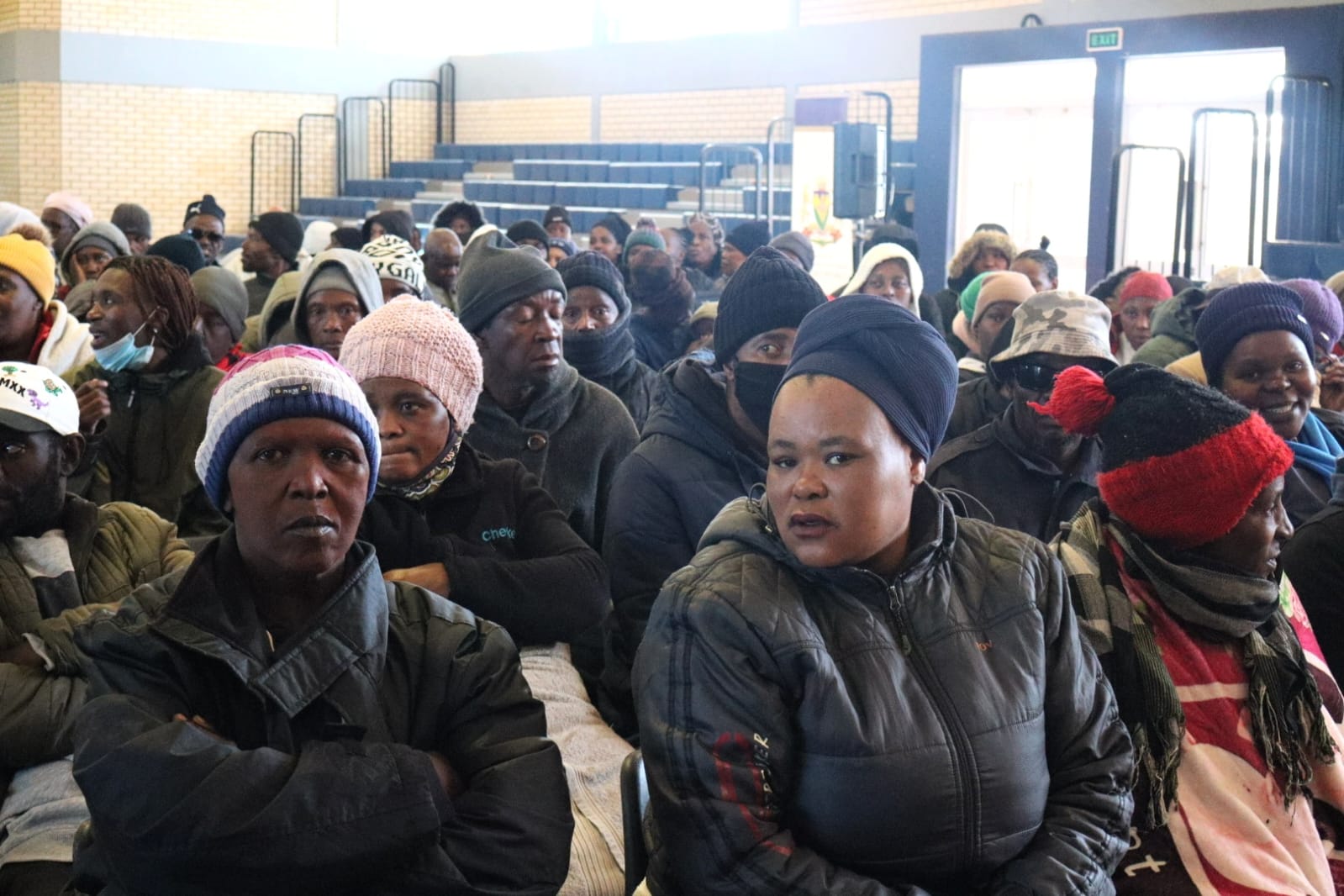
The budget was presented at Thabo Thokoza Secondary School in Bohlokong on 23 April.
At the centre of the department’s strategy is the urgent need to align provincial programmes with municipal planning frameworks—particularly in struggling municipalities such as Maluti-a-Phofung and Dihlabeng—where service delivery backlogs and economic pressures continue to weigh heavily on communities.
Officials warned that without tighter coordination, development efforts risk being delayed or failing to reach intended beneficiaries.
The district is already under strain as one of the epicentres of the Foot-and-Mouth Disease outbreak in the Free State, a crisis that has disrupted livestock farming and threatened rural livelihoods.
Government has been forced to roll out coordinated interventions, including vaccination drives, movement restrictions and public awareness campaigns.
In Maluti-a-Phofung, persistent challenges around land access, infrastructure gaps and limited support for emerging farmers continue to hinder progress.
The department says it is scaling up funding and training programmes aimed at improving productivity and accelerating black farmer commercialisation.
Meanwhile, Dihlabeng Municipality—home to Bethlehem and key agricultural zones—is being positioned as a hub for agri-processing, climate resilience and environmental sustainability.
Ongoing initiatives include tree-planting programmes and land management efforts to promote sustainable agricultural practices.
However, structural challenges remain. The department flagged land tenure constraints as a critical bottleneck, with misalignment between municipal lease agreements and national funding requirements delaying the approval of key agricultural projects.
“This misalignment is slowing down implementation and undermining the impact of development programmes,” officials indicated.
To address skills gaps and strengthen rural economies, partnerships with institutions such as the University of the Free State are being leveraged to drive agri-entrepreneurship, research and community-based development initiatives.
Government maintains that its programmes are aligned with national priorities of poverty reduction, job creation and food security, with interventions ranging from household food production to school nutrition gardens in vulnerable communities.
The District Development Model remains the cornerstone of this approach, intended to synchronise planning and investment across government and deliver measurable outcomes at local level.
But as pressure mounts on rural economies, the success of these interventions will hinge on one critical factor: whether municipalities can move beyond fragmented planning and translate coordination into tangible change on the ground.