
By Teboho Moloi
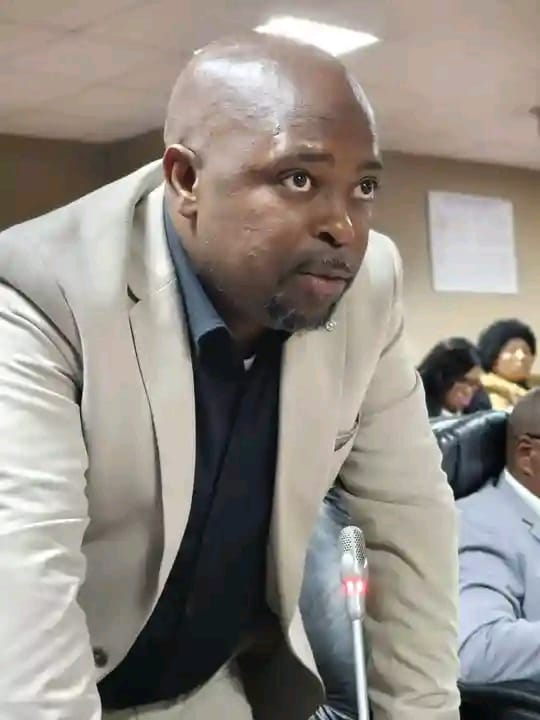
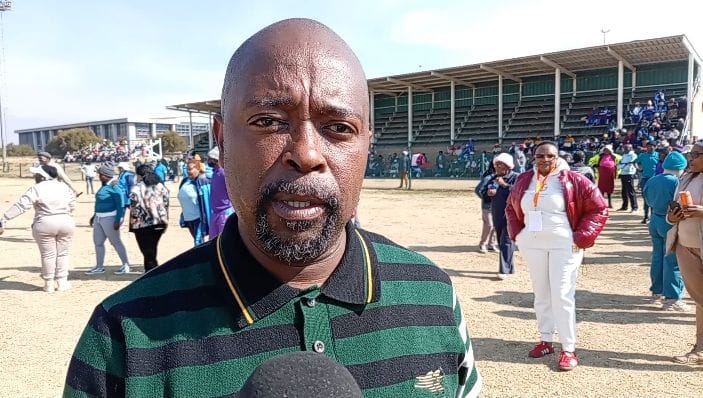
QWAQWA – Free State Cooperative Governance and Traditional Affairs (Cogta) MEC Saki Mokoena has delivered a blunt assessment of the province’s municipalities, admitting he is “not happy” with their condition despite signs of political stabilisation.
Mokoena said municipalities across the province – including the troubled Mangaung Metro – remain far from acceptable standards, even as internal conflicts among councillors begin to subside.
“I am far from being satisfied. I am not happy. I am only encouraged,” Mokoena said.
He pointed to a decline in infighting within councils as a key indicator of emerging stability, particularly in previously volatile municipalities such as Maluti-a-Phofung, Mohokare, Dihlabeng and Matjhabeng.
The MEC said this relative calm has enabled the provincial government to shift focus towards rebuilding governance systems and accelerating service delivery.
“That stability allows us to concentrate on reconstruction, stabilisation and service delivery,” he said.
Mokoena also highlighted modest gains in audit outcomes, with some municipalities beginning to recover from years of financial mismanagement.
Kopanong Local Municipality, once among the worst performers, has moved out of a disclaimer audit opinion, while Dihlabeng is improving from qualified findings and edging closer to cleaner audits.
“These are signs of movement in the right direction,” he said.
However, the MEC warned that the province still faces serious structural and financial challenges, particularly amid proposals to create new municipalities.
He confirmed that national Cogta has formally objected to the Municipal Demarcation Board’s (MDB) proposal to split Kopanong, citing a lack of supporting research.
“The law requires the MDB to provide a detailed research report, including viability studies, before any new municipality can be established,” Mokoena said.
He stressed that the Free State cannot afford the creation of another municipality under current conditions.
“We simply do not have the capacity or resources to sustain a new municipality at this stage,” he added.
Mokoena’s remarks underscore a province still battling deep-rooted governance failures, where political stability is emerging—but effective service delivery remains a distant goal.