
By Emily Setona
BLOEMFONTEIN – South Africa marked 32 years of democracy with a sharp message from national leaders: the constitutional order has held firm, but the country’s social and economic strains are deepening.
Minister of Sport, Arts, Culture and Recreation Gayton McKenzie used the platform to frame the 2024 general election as a defining stress test for the state.
With the ANC dropping below 50%, he said the peaceful acceptance of the outcome underscored democratic maturity.
“The biggest test for our freedom happened in 2024,” McKenzie said.
“The President accepted the result. In other countries, that moment brings instability. Here, it strengthened democracy.”
He credited Cyril Ramaphosa for steering the transition into a Government of National Unity, calling it proof of institutional resilience.
McKenzie also pointed to stabilising economic signals, including tourism growth and currency stability, as early indicators of recovery.
Taking the podium at the Dr Petrus Rantlai Molemela Stadium, Ramaphosa struck a balanced tone—celebrating democratic gains while confronting persistent failures.
He traced the Free State’s legacy from the founding of the African National Congress in 1912 to its role in the liberation struggle, describing the province as a crucible of the country’s freedom project.
Quoting Nelson Mandela, Ramaphosa urged renewed national purpose: to heal divisions, rebuild institutions and advance equality.
He cited post-1994 progress in housing, healthcare, education and electrification, alongside expanded access to higher education through state funding. But the President was blunt about the country’s fault lines.
“Failing water infrastructure, collapsing municipalities and deteriorating services are not inconveniences—they are brakes on growth and daily life,” he said.
Unemployment, inequality and gender-based violence remain entrenched, he added, warning that without decisive intervention, gains of the past three decades risk erosion.
Free State Premier MaQueen Letsoha-Mathae echoed the call for urgency, describing Freedom Day as both a milestone and a mandate to accelerate delivery.
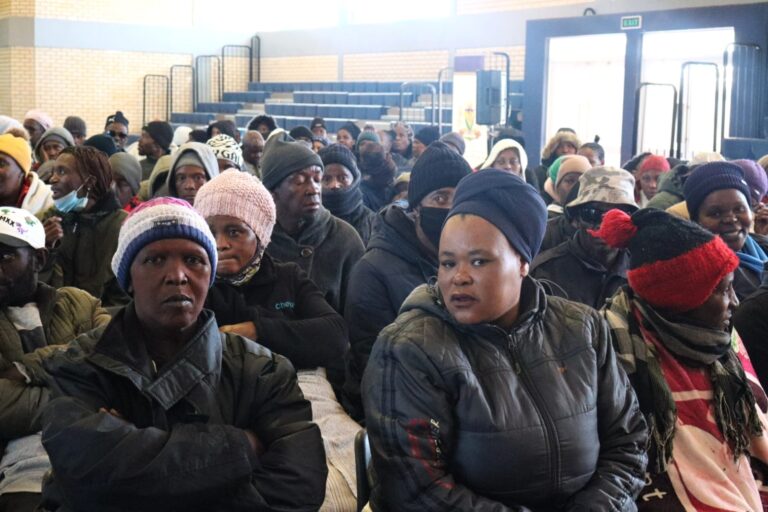
The commemoration drew government leaders, traditional authorities and citizens, reinforcing a shared commitment: protect the democratic gains of 1994—while confronting the realities threatening them.